PYRAMIDS-III
THE GIZA PYRAMIDS
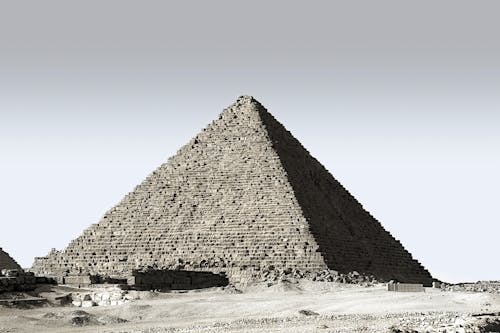
The Giza Pyramids, which were designed to last forever, have done exactly that. The massive tombs date back to Egypt's Old Kingdom era and were built some 4,500 years ago.
In the afterlife, Egypt's pharaohs were supposed to become gods. They built temples to the gods and enormous pyramid tombs for themselves to prepare for the next world, which were stocked with everything a king would need to govern and support himself in the next world.
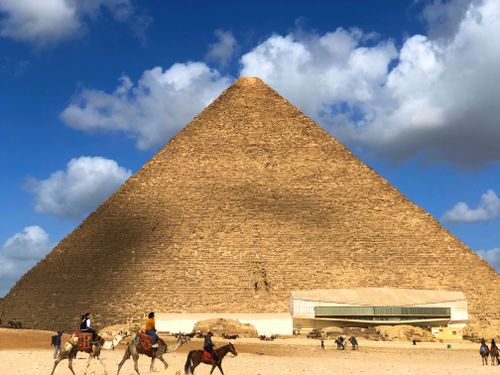
Around 2550 B.C., Pharaoh Khufu began the construction of the first Giza pyramid. His Great Pyramid, which stands 481 feet (147 metres) above the plateau, is the biggest in Giza. Each of the estimated 2.3 million stone blocks weighs between 2.5 and 15 tonnes. Pharaoh Khafre, Khufu's son, erected the second pyramid at Giza in 2520 B.C. The Sphinx, a mystery limestone monument with the body of a lion and the head of a pharaoh, was also part of his necropolis.
The Sphinx may serve as a guard for the entire pharaoh's burial complex. The third and smallest of the Giza Pyramids is much smaller than the previous two. It was built in 2490 B.C. by Pharaoh Menkaure and featured a considerably more elaborate funerary temple.
Each enormous pyramid is part of a bigger complex that also includes a palace, temples, solar boat pits, and other structures.

DYNAMIC ACTION
Strong earthquakes and seismic occurrences that have rocked the Giza area have caused modest to major damage and structural inadequacy to the pyramid complex, according to historical records.
The number of recorded earthquakes varied between zero and three until the end of the ninth century. In the eleventh century, an unusually high number of earthquakes (eight) were observed. In the nineteenth century, the number of earthquakes registered reached its greatest point.
What is the cause behind the monuments' shown resilience to prior earthquakes? Is it because of the Giza plateau's favourable seismic behaviour (limestone tertiary/cretaceous) or because of the manner the buildings were built that they were able to survive earthquakes?
The pyramid site has a very low seismicity setting, according to the instrumental seismicity map.
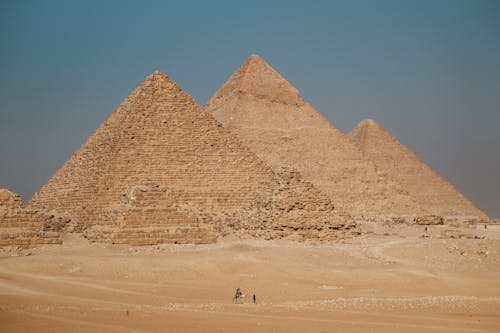
The Great Pyramids of Giza are arguably the only survivors of the ancient world's seven wonders due to the site selection and geological properties of the area, being away from seismic effects, floods, and groundwater levels, the stability of the geometric form of the pyramid, the solidity of the structural engineering, and precision of execution. The epicentres of the majority of the catastrophic earthquakes are on the Nile's eastern bank. In addition, the isoseismal intensity contour map revealed that intensity values larger than VI on the Mercalli scale had little effect on the pyramid site.In addition, one of Egypt's three seismotectonic tendencies goes through Fayoum province but bypasses the Pyramids.
The sedimentary strata underneath the pyramids were thought to be a suitable foundation for the huge rock edifice.

The Future of the Pyramids
Since the Arab Spring in 2011, when Egypt suffered years of political instability, tourism to the structures has steadily dropped. Since then, the country has gone through many administration changes, making the future of travel to the Pyramids questionable.


Comments
Post a Comment