PYRAMIDS-II
PYRAMIDS-II
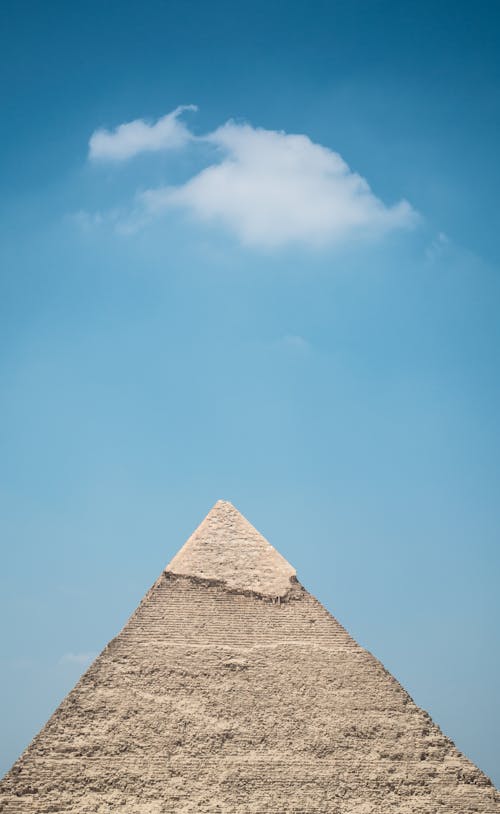
THE EGYPTIAN PYRAMID
Myr is the Egyptian word for pyramid. It is inscribed using Gardner Symbol List sign O24. Three more signs are employed as phonetics before the Myr. Myr's meaning is unknown because it solely refers to the constructed thing itself. 'High Place' is a common translation of the word myr. Myr employs the same sign, O24, as Benben, according to graphical analysis. In the Egyptian creation storey, the Benben is the mound of beings that ascended from the abyss.
The Egyptian pyramids are masonry constructions that date back to ancient Egypt. At least 118 Egyptian pyramids have been identified, according to sources. During the Old and Middle Kingdom periods, the majority were constructed as tombs for the country's pharaohs and their consorts.
Although at least one step-pyramid-like structure has been found at Saqqara, dating to the First Dynasty: Mastaba 3808, which has been attributed to the reign of Pharaoh Anedjib, with inscriptions and other archaeological remains of the period, suggesting there may have been others, the earliest known Egyptian pyramids are found at Saqqara, northwest of Memphis. The Djoser Pyramid, constructed in 2630–2610 BCE during the Third Dynasty, is the oldest of them. This pyramid and its surrounding complex are often regarded to be the world's earliest dressed masonry monumental monuments.
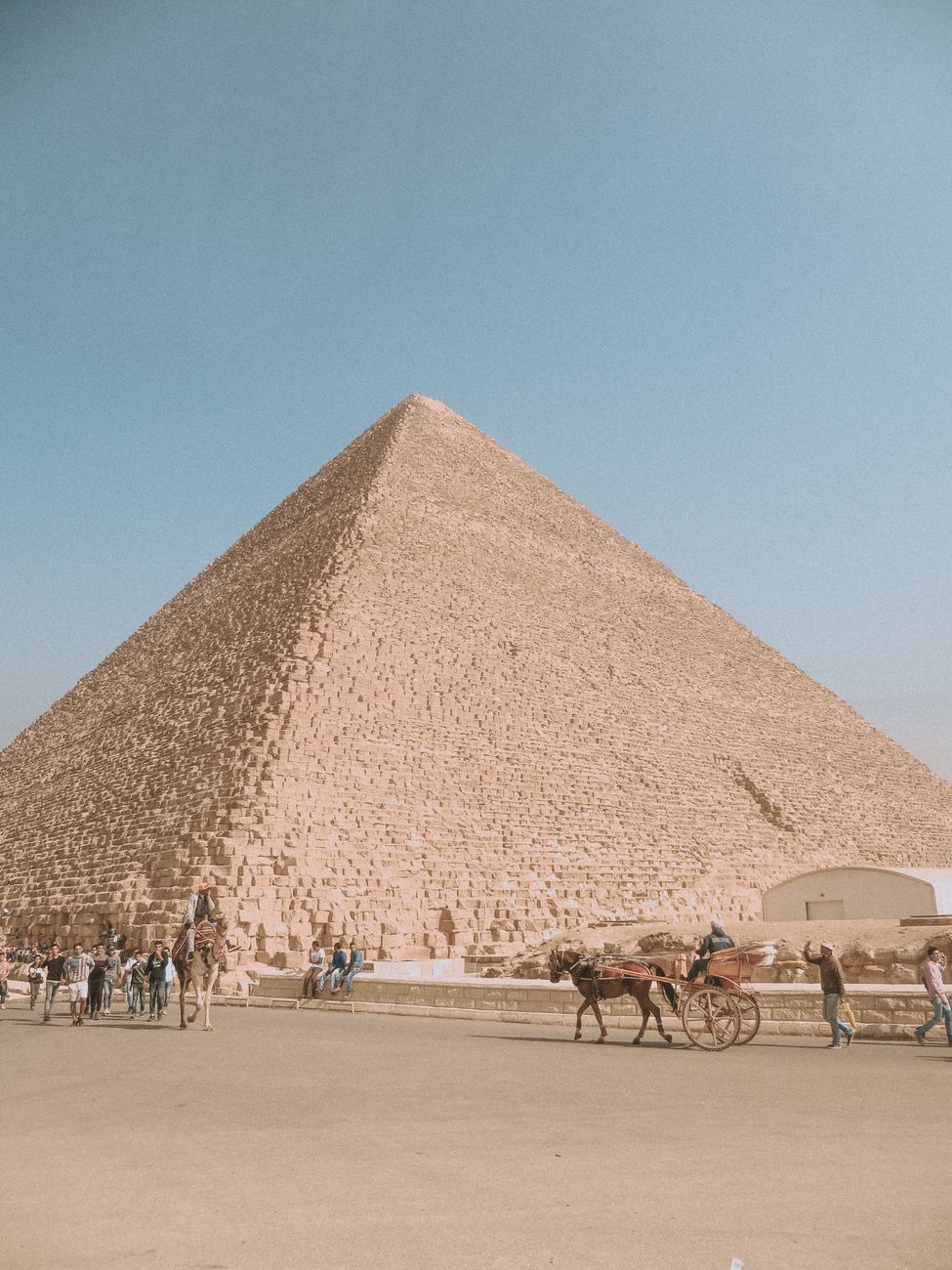
Giza, on the outskirts of Cairo, is home to the most renowned Egyptian pyramids. Several of the Giza pyramids are among the world's biggest buildings. The Pyramid of Khufu is Egypt's tallest structure. It is the only one of the Ancient World's Seven Wonders that has survived.
PYRAMID SYMBOLISM
Egyptian pyramids are said to be modelled after the primordial mound from which the Egyptians believed the earth was formed. Most pyramids are coated with polished, highly reflecting white limestone to give them a bright look when viewed from afar, as the shape of a pyramid is considered to be symbolic of the sun's falling rays. Pyramids were frequently given names that alluded to sun radiance. The Southern Shining Pyramid, for example, was the formal name of the Bent Pyramid at Dahshur, while Senusret Shines was the formal name of Senusret II at El Lahun.
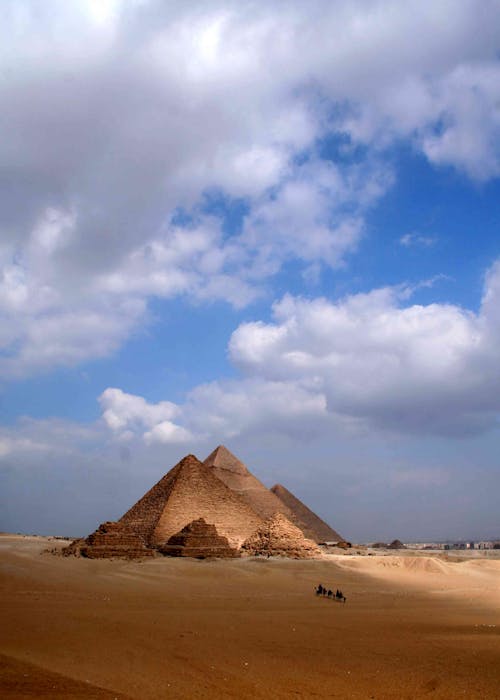
While it is widely accepted that pyramids were built as funeral monuments, there is still debate regarding the theological concepts that may have inspired them. They may have been created as a kind of "resurrection machine," according to one theory.
The Egyptians believed the physical doorway into the heavens was the black region of the night sky around which the stars appear to rotate. One of the small shafts that runs from the main burial chamber all the way through the Great Pyramid's body aims straight at the middle of the sky. This implies that the pyramid was built with the intention of miraculously launching the deceased pharaoh's spirit into the home of the gods.
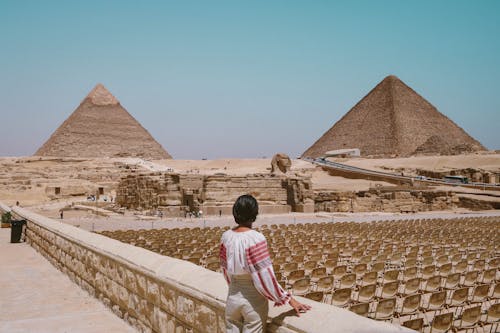
All Egyptian pyramids were erected on the west bank of the Nile, which was connected with the land of the dead in Egyptian mythology as the location of the sinking sun.
Among the most well-known pyramids in America are the Sun and Moon Pyramids in Teotihuacán, the Castillo at Chichén Itzá, and numerous Inca and Chim structures in Andean cities. Pyramids in the United States are frequently stepped in design and topped by a platform or temple building, and they were built of earth and later coated with stone. The Pyramid of the Sun, with a base of 220 by 230 metres (722 by 755 feet), is equivalent in size to Giza's Great Pyramid of Khufu, which measures 230 square metres (2,476 square feet).


Comments
Post a Comment